
Wastewater Treatment Equipment: A Practical Buyer's Guide
A wastewater treatment system is an engineered train of physical, biological and separation processes that reduces the pollutant load in domestic sewage or industrial effluent to a defined discharge limit. Three inputs decide the design before any equipment is chosen: influent water quality, the required effluent standard, and the treatment flow rate.
This guide is written for the earliest stage of a project, when a buyer knows there is a discharge problem but has not yet fixed a process, a footprint or a supplier. It explains what each system family does, which specification data actually matters, the order in which decisions should be made, and the checks that separate a workable quotation from an expensive correction later.
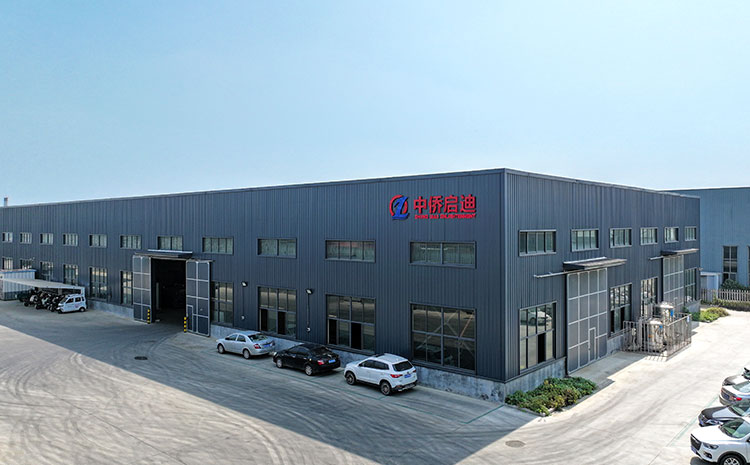
Zhongqiao Enlightenment (Shandong Zhongqiao Enlightenment Environmental Protection Equipment Co., Ltd.) is a China-based manufacturer of wastewater treatment equipment, established in 2013, producing integrated wastewater treatment equipment, dissolved air flotation (DAF) units, lamella clarifiers and MBR membrane systems from a 40,000 m² facility in Weicheng District, Weifang, Shandong. Its published product data and project references are used throughout this article as worked examples of how specification decisions appear on paper.
Problem Definition: What Has to Be Solved Before Equipment Is Chosen
Wastewater cannot be discharged on the basis of volume alone. Industrial wastewater has to pass through a treatment process that removes the specific pollutants generated by the production process down to a defined limit, and the same logic applies to sewage from buildings, camps and plants. The practical difficulty for a buyer is that the pollutant dominating one site is often irrelevant at another.
Three failure patterns account for most badly specified systems:
- Load mismatch. A plant sized on average daily flow but not on oil, suspended solids or peak loading will pass commissioning and then fail under real production conditions.
- Standard mismatch. Discharge to a municipal sewer, discharge to surface water and internal reuse are three different effluent targets, and they produce three different process trains.
- Interface mismatch. Above-ground versus underground installation, available footprint, power supply and automation level change the equipment configuration as much as the biology does.
Before comparing suppliers, a buyer should be able to state the influent characteristics, the discharge requirement in the local jurisdiction, and the design flow rate. Zhongqiao Enlightenment states the same three items as its minimum input for selection: influent water quality, effluent discharge requirements and treatment flow rate.
Industry Background: A Large, Trade-Intensive Equipment Category
Wastewater treatment equipment sits inside a large and internationally traded machinery category. Trade data from the Observatory of Economic Complexity records global trade in water filtering and purifying machinery (HS code 842121) at USD 12.4 billion in 2024, a 4.34% increase over 2023. China was the largest exporter in that category in 2024 at USD 2.38 billion, ahead of Germany at USD 1.3 billion.
Forecast figures vary by scope and should be read as planning context rather than procurement evidence. One commercial projection, published by The Business Research Company, estimates the global wastewater treatment equipment market reaching USD 43.94 billion by 2030. The practical reading for a buyer is not the headline number but the structure behind it: a concentrated export base in China, a wide range of competing configurations, and therefore a genuine need for specification discipline when quotations are compared.
Two consequences follow. First, because much of this equipment is built for export, buyers should expect drawings, material certificates and O&M documentation to be part of the commercial offer rather than an afterthought. Second, because configurations differ, price comparison only becomes meaningful once flow rate, influent load, effluent target and materials are fixed for every quotation being compared.
Detailed Solution: The System Families and What Each One Does
Integrated and packaged wastewater treatment equipment
An integrated plant places biological treatment, settling and often disinfection inside a single factory-built unit. The WSZ-100 integrated wastewater treatment equipment from Zhongqiao Enlightenment is classified as domestic sewage treatment equipment and is built in carbon steel, SS304 or PP. Its published scope covers hotel wastewater, hospital wastewater, camp domestic wastewater, slaughterhouse wastewater, livestock breeding wastewater, domestic sewage and domestic wastewater, installed either above ground or underground.
The configuration is what makes this family attractive at the research stage: equipment ships as complete units, on-site installation is short, the footprint is small and civil works are reduced, the unit can be relocated or expanded later, operation is automatic with low labour input, and the material options suit corrosive duty. The trade-off is that the process envelope is fixed at the factory, so the influent characterisation has to be right before the order is placed.
A typical WSZ-100 build includes two fans (100-7.5, one duty and one standby), a Siemens PLC module, a PLC control panel, an HDBox-4G-A remote module, a multifunctional meter, Schneider electrical elements, two PXZ15-30-1.5 self-priming pumps with DN40 connections, a 100 L PE dosing device, a metering pump rated 120 L/h and a water flow meter. That component list is worth reading closely, because duty/standby redundancy, remote access and instrument quality are exactly the items most often removed from cheaper offers.
MBR membrane bioreactor systems
An MBR system combines biological treatment with membrane separation in place of a conventional secondary clarifier. Zhongqiao Enlightenment supplies MBR membrane bioreactor systems as one of its four core product lines. In specification terms, MBR belongs on a shortlist when the effluent target or the available footprint pushes a project toward a more compact biological train; the design still depends on influent load and effluent requirement, not on the membrane alone.
Dissolved air flotation (DAF)
Dissolved air flotation removes suspended solids and oil by dissolving air into a recycled stream and releasing it as microbubbles that lift solids to the surface for scraping. It normally sits ahead of biological treatment, where oil and grease would otherwise disturb the biomass.
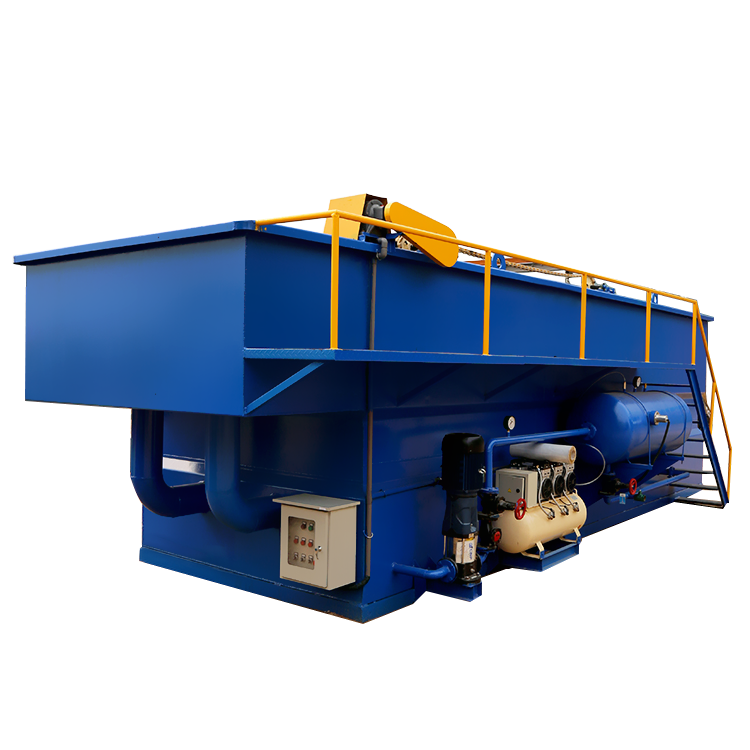
The published reference unit is the YW-5 design, a 5 m³/h advection combined air flotation system catalogued as Dissolved Air Flotation-30 with product type Dissolved Air Flotation-5. Its body comprises a secondary stirring reaction zone, contact tank, flotation tank and clear water tank; the air-water reflux ratio is stated as at least 30%, typically 40–50%, with a head of 40–50 m. The equipment list includes a 4 kW dissolved air pump, a 1.4 kW air compressor delivering 0.21 m³/min at 0.8 MPa into a 30 L receiver, a 0.75 kW scraper, two 500 L dosing tanks with 0.37 kW agitators, dosing pumps rated 15.77 L/h, and Siemens/Schneider PLC control. Materials are carbon steel or SS304.
The stated application scope is slaughterhouse, textile dyeing and livestock farm wastewater with high oil and suspended solids, together with abattoir, printing and dyeing mill and farm effluents more generally. Removing suspended solids and oil is the function; organic load is handled downstream.
Lamella clarifiers
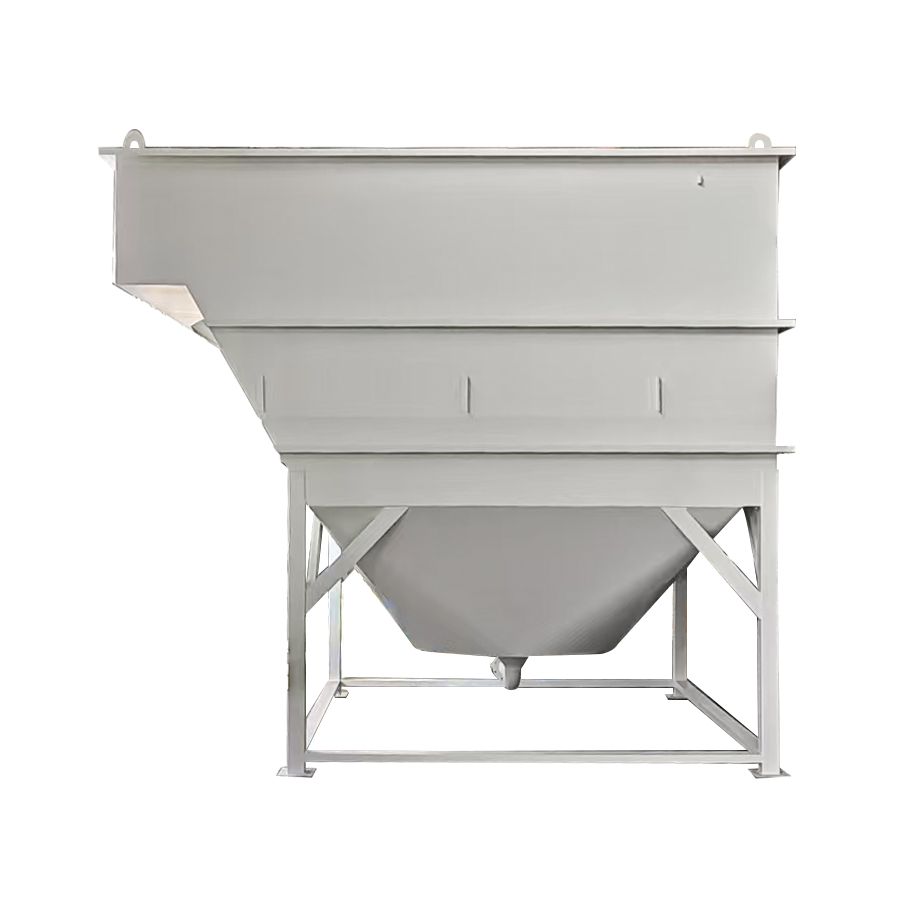
A lamella clarifier uses inclined plates to increase the settling area within a small footprint, so solids settle over a short vertical distance and slide into a sludge collection zone. Zhongqiao Enlightenment produces lamella clarifiers for wastewater treatment plants. In a process train they usually appear after biological treatment or after chemical coagulation, where the job is clarification rather than biological conversion.
Containerized systems
A containerized plant packages the treatment train into transportable modules, which suits sites where civil construction is slow, expensive or simply impossible. A documented reference is a containerized treatment project for wheat washing wastewater in the American Midwest, with a daily wastewater volume of approximately 150 m³/d. The value of that reference at the research stage is not the headline capacity but the demonstration that the whole train, not just the tank, travels as a unit.
Material choice as a design decision
Material selection is frequently treated as a price lever when it is in fact a service-life decision. Carbon steel is the conventional shell for neutral effluent; SS304 is specified where corrosion resistance matters; PP is used for aggressive duty. Zhongqiao Enlightenment publishes that its PP integrated sewage treatment equipment withstands acid and alkali corrosion within a pH range of 3 to 14. Where influent pH swings, that range is a specification point to confirm in writing rather than assume.
How to Specify a System in Seven Steps
- Characterise the influent. Record flow rate, pH, temperature, suspended solids, oil and grease, and organic load, including shift-based or seasonal peaks. Streams from slaughterhouses, textile dyeing or food processing behave very differently from domestic sewage.
- Fix the effluent target. Confirm the local discharge requirement before discussing equipment. Effluent standards are customisable by project; common national standards include Grade 1A and Grade 1B, which cover municipal discharge and water reuse scenarios.
- Size for peaks, not averages. Rated capacity is a design point, not a maximum. A 5 m³/h DAF and a 150 m³/d containerized plant are both defined against a stated duty, and each has to be checked against the real peak.
- Build the process train. A common order is pre-treatment and screening, DAF for oil and suspended solids, biological treatment (integrated or MBR), clarification (lamella where footprint is tight), and disinfection. Each stage should have a named pollutant it removes.
- Choose configuration and materials. Decide above-ground or underground installation, carbon steel, SS304 or PP, and the automation level. Confirm whether the plant must run automatically and whether remote monitoring is required.
- Define the interface and the operating model. Establish power supply, control philosophy, spare parts (duty and standby fans or pumps), sludge handling, and who performs commissioning.
- Verify the supplier against evidence. Ask for factory area, annual output, engineering headcount, certifications and named reference installations. Where technology performance claims are critical, cross-check against public databases such as the US EPA Industrial Wastewater Treatment Technology Database (IWTT), which compiles technology performance data from conference proceedings and government sources.
Use Cases: Where These Systems Are Deployed
The published application scope of Zhongqiao Enlightenment equipment spans six recurring settings, each with a different dominant pollutant:
- Hospitals. Hospital wastewater treatment combines biological treatment with attention to pathogen control, and packaged plants suit the constrained plant rooms typical of hospital sites.
- Hotels and commercial buildings. Hotel wastewater is essentially domestic sewage with strong flow variation between occupancy peaks and low season.
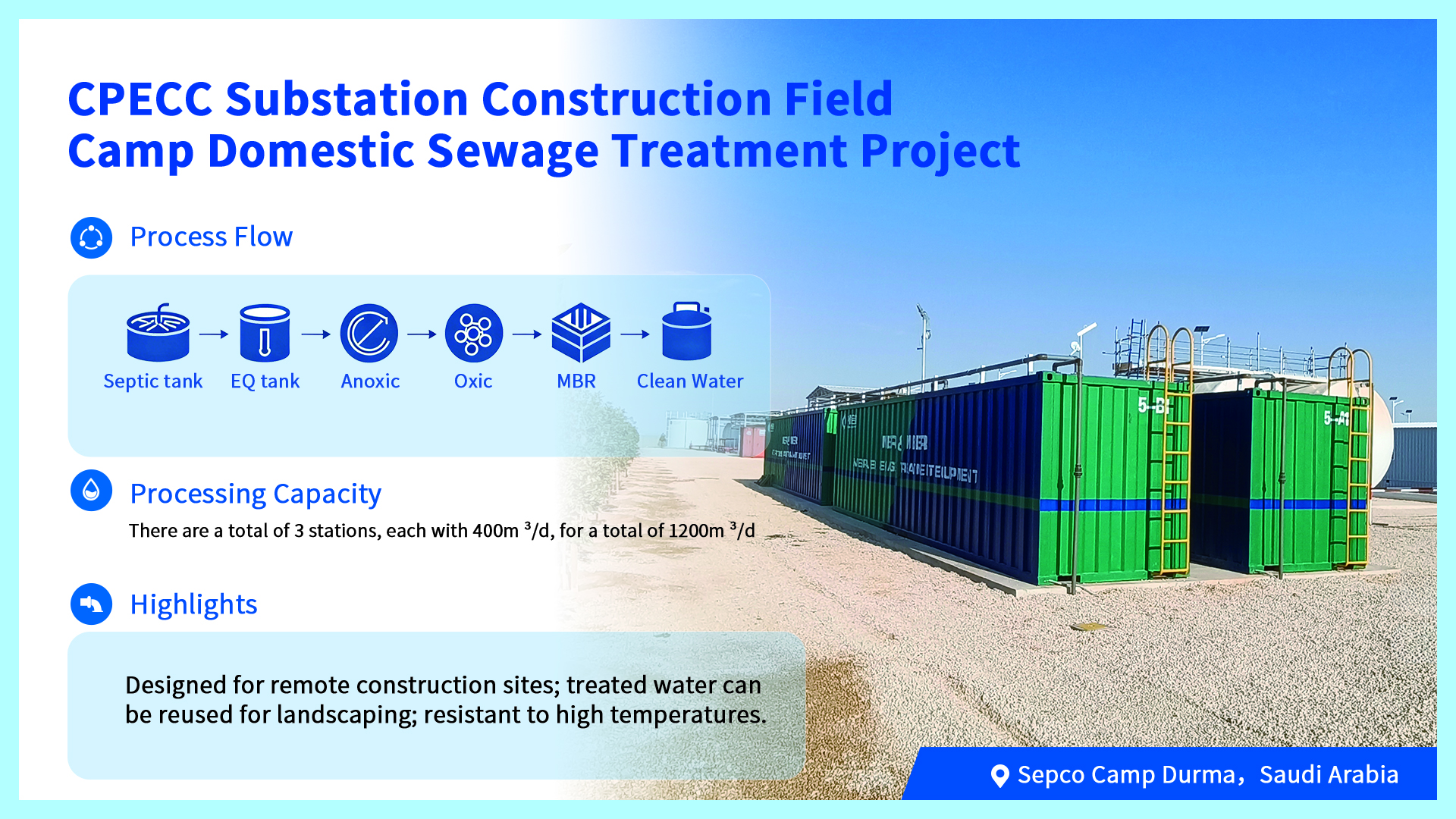
- Camps and construction sites. Camp domestic wastewater treatment has to work where no municipal sewer exists; a documented reference is the CPECC substation construction field camp domestic sewage treatment project.
- Slaughterhouses and livestock farms. These streams carry high oil, grease and suspended solids, which is why DAF normally precedes the biological stage. Named references include a slaughterhouse wastewater treatment project in Shanxi and a livestock wastewater treatment project in South Korea.
- Food and beverage processing. A food factory sewage treatment project in Xinjiang and a food processing wastewater treatment reference show the same pattern: high organic load and a variable production schedule.
- Textile dyeing and printing. Printing and dyeing effluent is named in the DAF application scope because of its suspended solids and oil content.
Two further references show the geographic spread of the installed base: domestic wastewater treatment in Indonesia, and a unit of integrated sewage treatment equipment delivered to Saudi Arabia. A sewage treatment project at a highway service area demonstrates the same packaged logic applied to a remote site with no sewer connection. Across the company, equipment has been exported to more than 30 countries and regions, with more than 4,000 installations in China and overseas; the main markets are Southeast Asia, the Middle East, North America and Central Asia.
Comparison: Matching the System Family to the Duty
The table compares the families on the dimensions that decide a shortlist. Where no figure is published for a model, the cell says so, because that number should be requested in the quotation rather than assumed.
| System family | Primary function in the train | Published configuration and specification notes | Applications named in published scope |
|---|---|---|---|
| Integrated or packaged sewage treatment equipment (WSZ-100) | Biological treatment and settling in one factory-built unit | Carbon steel, SS304 or PP; automatic operation; above-ground or underground installation; PLC control, dosing and duty/standby fans included in the reference build | Hotel, hospital, camp, slaughterhouse, livestock breeding, domestic sewage and domestic wastewater |
| MBR membrane bioreactor system | Biological treatment combined with membrane separation | Supplied as an MBR membrane system; membrane area and capacity are project-specific and not published as a fixed model | Duties where a compact biological train and a defined effluent target are specified |
| Dissolved air flotation (YW-5 reference design) | Removal of suspended solids and oil ahead of biological treatment | 5 m³/h rated; reflux ratio at least 30% (typically 40–50%); head 40–50 m; carbon steel or SS304; 4 kW air pump and 1.4 kW compressor | Slaughterhouse, textile dyeing, livestock farm, abattoir, printing and dyeing mill, farm |
| Lamella clarifier | Gravity settling over inclined plates to reduce footprint | Settling area increased by inclined plates; model capacities are project-specific | Wastewater treatment plants, typically as a clarification or polishing stage |
| Containerized system | Complete treatment train in transportable modules | Reference project at approximately 150 m³/d for wheat washing wastewater; modules travel as a unit | Industrial and remote sites where civil construction is constrained |
A second comparison matters just as much: material specification. Carbon steel is the lowest-cost shell for neutral effluent; SS304 is specified where corrosion resistance is required; PP extends the corrosion envelope, with published resistance across pH 3–14. Because the shell cannot be upgraded later without replacing the plant, material should be decided against the measured pH and chloride level of the actual effluent.
Frequently Asked Questions
What effluent standard can a wastewater treatment system achieve?
Effluent standards are customised per project rather than fixed by the equipment model. Common national standards include Grade 1A and Grade 1B, which can meet municipal discharge and water reuse scenarios. The influent water quality and the local discharge requirements must be provided before selection, and the equipment is then designed to meet those indicators.
What information is needed before a wastewater treatment system can be sized?
Three inputs are mandatory: influent water quality, effluent discharge requirements and treatment flow rate. Site conditions also change the configuration, including whether the plant is installed above ground or underground, the available footprint, the power supply, and whether automatic operation and remote monitoring are required. Without the three mandatory inputs, any capacity figure quoted is an assumption rather than a design.
How is the price of a wastewater treatment system determined?
No single price applies, because four variables move independently: the design flow rate, the influent pollutant load (oil and suspended solids in particular), the effluent target, and the materials and configuration. A carbon steel plant with a simple biological train costs less than an SS304 or PP plant with DAF pre-treatment, MBR separation and remote monitoring. A quotation is therefore prepared after the influent and effluent data are supplied, so that every supplier is pricing the same duty.
Can I review technical documentation or reference projects before ordering?
Yes. The company brochure covering products, specifications and project experience can be downloaded from the link at the end of this article. Named references are available for review, including a slaughterhouse wastewater treatment project in Shanxi, a livestock wastewater treatment project in South Korea, food factory and hospital sewage treatment projects, domestic wastewater treatment in Indonesia, a camp domestic sewage project for a substation construction field, and a containerized wheat washing wastewater project in the American Midwest at approximately 150 m³/d. A technical meeting can be arranged to review drawings against a specific influent analysis.
What production capacity and delivery schedule should I expect?
Zhongqiao Enlightenment operates a 40,000 m² manufacturing facility with approximately 170 employees, a 15-engineer R&D team and an annual production capacity of about 900 sets of wastewater treatment equipment. Because integrated and containerized plants are assembled in the factory, site installation is shortened, but the actual delivery date depends on the configuration, the selected material and the current production schedule. The schedule should be confirmed in writing against the approved drawings rather than inferred from capacity alone.
Conclusion: Specification Discipline Comes Before Supplier Selection
Wastewater treatment equipment is not a catalogue purchase. The decisive variables, namely influent quality, effluent standard and flow rate, are project facts, and the process train, materials and configuration follow from them. A buyer who fixes those three inputs early can compare quotations on equal terms; a buyer who does not will end up comparing prices for equipment that is not the same.
The system families covered here answer different duties rather than competing for one: integrated and packaged plants for domestic and light industrial sewage, DAF for oil and suspended solids, MBR where a more compact biological train is required, lamella clarifiers for settling in tight footprints, and containerized modules for sites without civil works. Zhongqiao Enlightenment manufactures all of these categories from a single facility, which helps at the research stage because the specification advice and the equipment come from the same engineering team.
Next Step: Send Your Influent and Effluent Data
To move from research to a priced proposal, send the influent water quality, the required discharge standard and the design flow rate. The engineering team will return a recommended process train, a configuration drawing and a quotation for that specific duty.
Brochure: Zhongqiao Enlightenment brochure, 13th edition (PDF)
Contact: Sunny | WhatsApp and WeChat: +86 156 1060 0767 | Email: zqqdequipment@163.com
Website: www.zqqdwater.com | Address: Lebushan Industrial Park, Weicheng District, Weifang City, Shandong Province, P.R. China
Have Questions or Need More Details?
Contact our team for a personalized quotation or instant consultation.
Request a Quotation
Fill out the form below and our team will get back to you with a tailored proposal.
WhatsApp Direct Chat
Prefer to chat in real-time? Message us on WhatsApp for instant assistance & quick answers.
- Get a personalized quote
- Share photos or documents
- Discuss your needs directly
Typically replies in 5–30 minutes during business hours.