
Dissolved Air Flotation vs Integrated Sewage Treatment Equipment: A Buyer's Comparison Guide
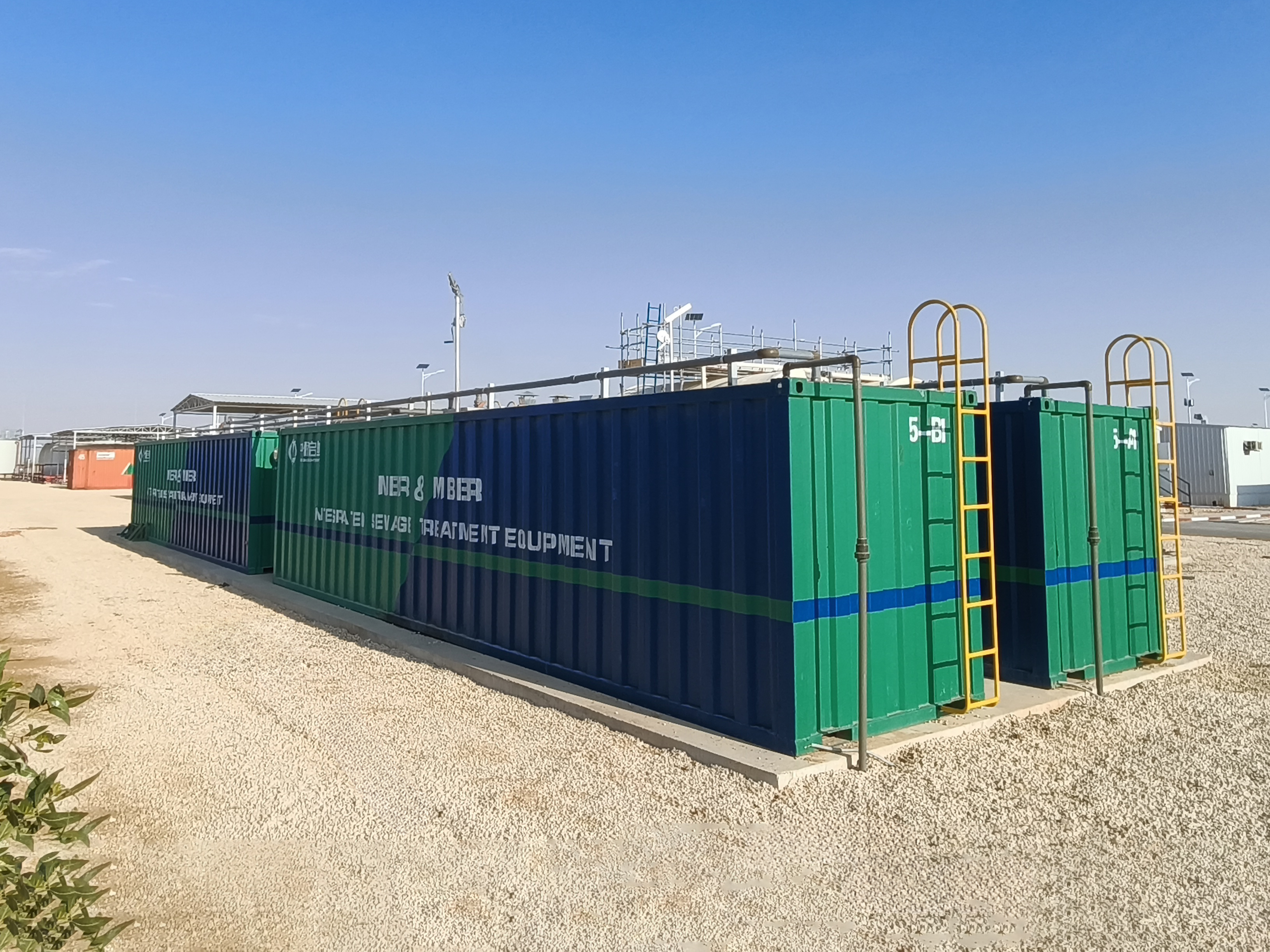
Dissolved air flotation (DAF) and integrated sewage treatment equipment are not interchangeable. A DAF unit removes oil, grease, and suspended solids by flotation. An integrated sewage treatment unit handles domestic-type sewage and similar flows in a compact, relocatable modular package. The correct choice depends on the wastewater composition, the discharge or reuse target, the site, and the expansion plan. This guide compares an advection combined DAF (YW-5, rated 5 m³/h) with the WSZ-100 integrated sewage treatment equipment from Zhongqiao Enlightenment, using verified specifications and application facts.
Problem Definition: Why Buyers Compare the Wrong Equipment
Buyers often ask for “a wastewater treatment plant” without separating high-oil and high-suspended-solids streams from domestic-type sewage. That single request can lead to two opposite errors. If a DAF is specified as the only treatment step, soluble organic matter may not be addressed. If an integrated biological unit receives a high oil and solids load, the downstream process can be overloaded.
The practical question is not which equipment is universally better. The practical question is which unit—or which combination—matches the duty. A DAF is a separation device. An integrated sewage treatment unit is a compact treatment package for sewage and similar flows. They can sit in the same plant, but they do not perform the same function.
Industry Background: Scale, Pollution, and the Need for Duty Matching
Industrial activities generate large quantities of wastewater that may be heavily contaminated. Industrial wastewater needs a treatment process to remove specific pollutants generated by production to a defined limit. This is the reason treatment trains are built around the pollutant profile rather than around a single equipment category.
The commercial scale is significant. In 2024, global trade in water purification and filtration equipment under HS 842121 reached USD 12.4 billion, and China was the leading exporter at USD 2.38 billion, according to the Observatory of Economic Complexity. These figures describe trade in a broad equipment category; they do not define the right system for a specific plant. For a buyer, the useful conclusion is that many configurations are available, so the specification must be precise.
Regulatory pressure adds another layer. Effluent limits are set locally, and the same equipment can be configured to different discharge or reuse targets. The integrated unit’s effluent standard is customizable; common national standards include Grade 1A and Grade 1B for municipal discharge and water reuse. That flexibility is useful only when the buyer provides the influent quality and the local discharge requirement before selection.
Detailed Solution: Two Equipment Duties, One Decision Framework
Advection Combined DAF: Separation of Oil, Grease, and Suspended Solids
The YW-5 is an advection combined air flotation unit with a rated processing capacity of 5 m³/h. Its main body includes a secondary stirring reaction zone, a contact tank, a flotation tank, and a clear water tank. The air-water reflux ratio is at least 30%, typically 40% to 50%, with a head of 40 to 50 meters. A dissolved air pump (40-200, 4 kW), an air compressor (380 V, 1.4 kW, exhaust volume 0.21 m³/min, exhaust pressure 0.8 MPa, air storage 30 L), and a nylon aeration release device generate the micro-bubble flow. A scraper (0.75 kW) removes floated sludge. Dosing tanks (500 L, 0.37 kW, two units) and dosing pumps (15.77 L/h) support chemical addition. The electronic control system uses Siemens PLC and Schneider Electric components. Materials are carbon steel or SS304.
The verified application scope is abattoir, printing and dyeing mill, farm, and other types of industrial wastewater. In practice, that means the DAF is selected when oil, grease, and suspended solids are the dominant load, or when a downstream biological unit needs protection from those loads. The unit is not a substitute for biological treatment of soluble organics.
WSZ-100 Integrated Sewage Treatment Equipment: Modular Treatment for Sewage-Type Flows
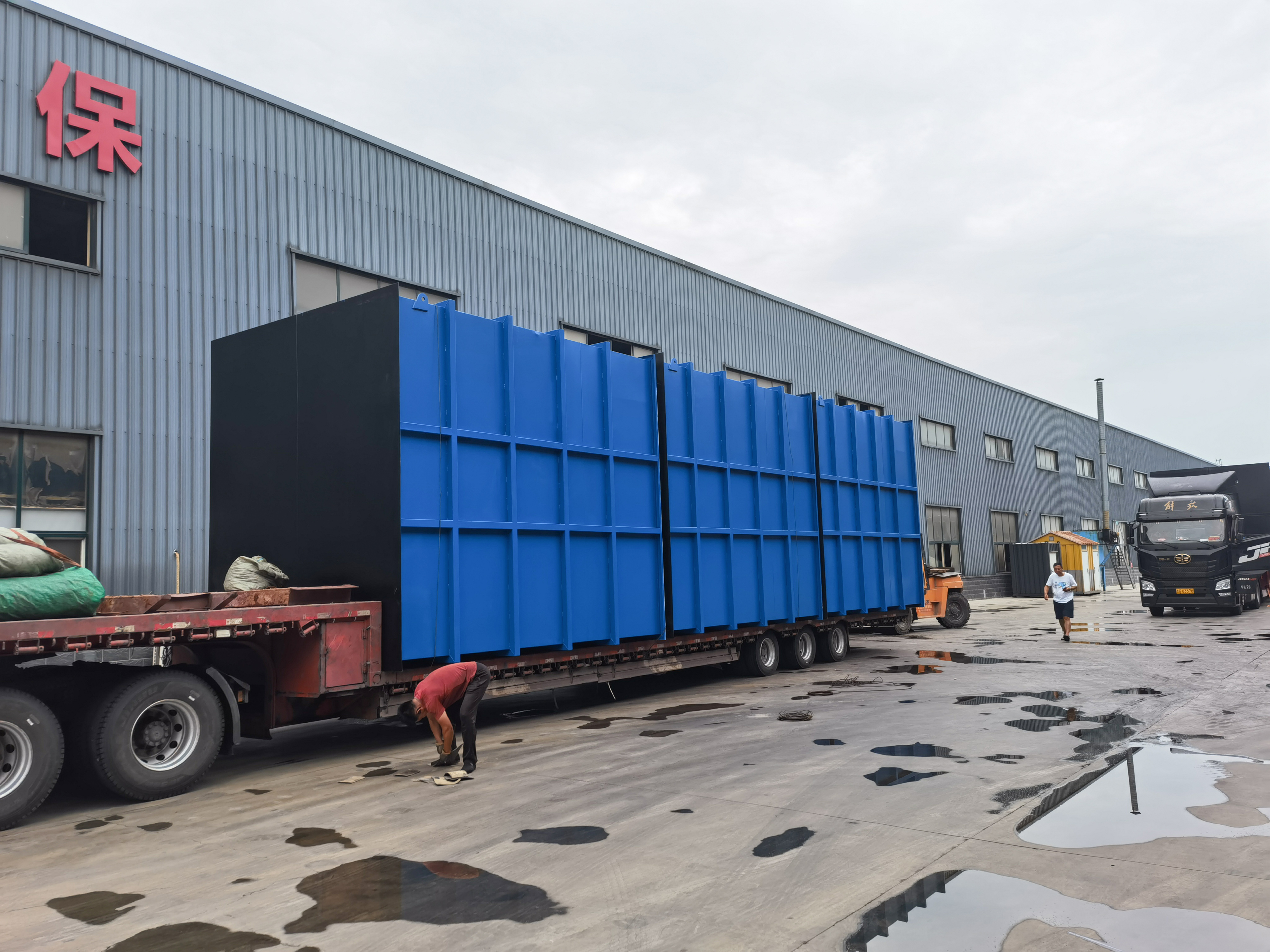
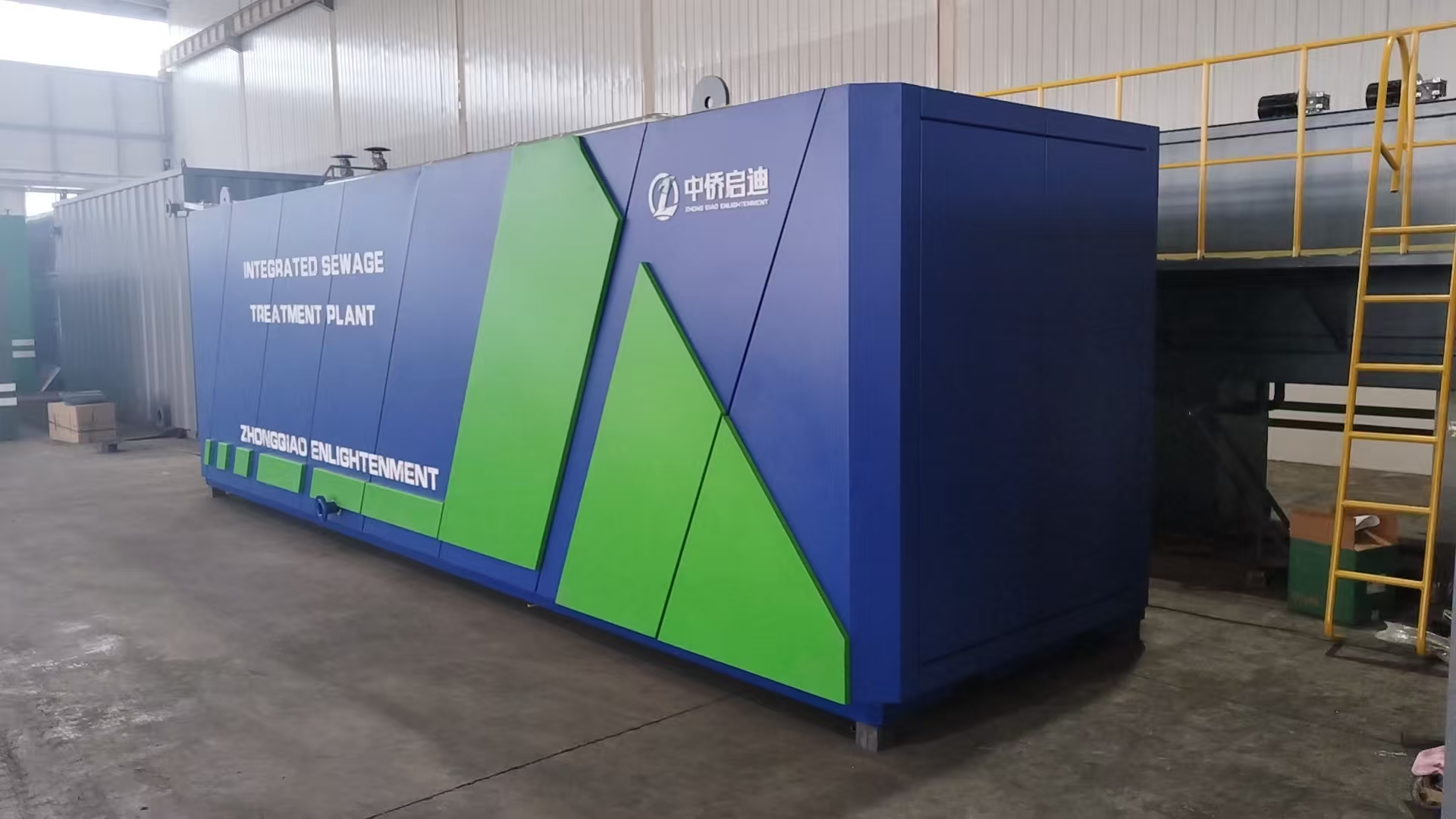
The WSZ-100 is integrated sewage treatment equipment designed for domestic sewage and similar flows. Verified applications include hotel wastewater, hospital wastewater, camp domestic wastewater, slaughterhouse wastewater, livestock breeding wastewater, domestic sewage, and domestic wastewater. The unit is built as a relocatable modular assembly, which supports above-ground or underground installation and later relocation or expansion. Materials include carbon steel, SS304, and PP.
The control package includes a Siemens PLC module, a PLC control panel (Chaos Technology), an electrical control cabinet, a remote HDBox-4G-A module, a multifunctional meter, and Schneider Electric components. Fans are supplied as two sets with one duty and one standby. Self-priming pumps (PXZ15-30-1.5, DN40), a 100 L PE dosing washing device, a 120 L/h controlled volume pump, and a water flow meter are included. The unit can operate automatically. The effluent standard is customizable to Grade 1A or Grade 1B, depending on the local requirement.
Where the Two Units Meet
For a slaughterhouse, food-processing plant, or similar site, a DAF can be placed ahead of an integrated biological unit. The DAF removes oil and suspended solids; the integrated unit addresses the remaining soluble organics and sewage-type flow. This is a process-design decision, not a standard package. The influent quality, flow, and discharge limit determine the configuration. Buyers should ask for a mass balance and a clear scope split between the DAF and the downstream unit.
Materials, Controls, and Expansion
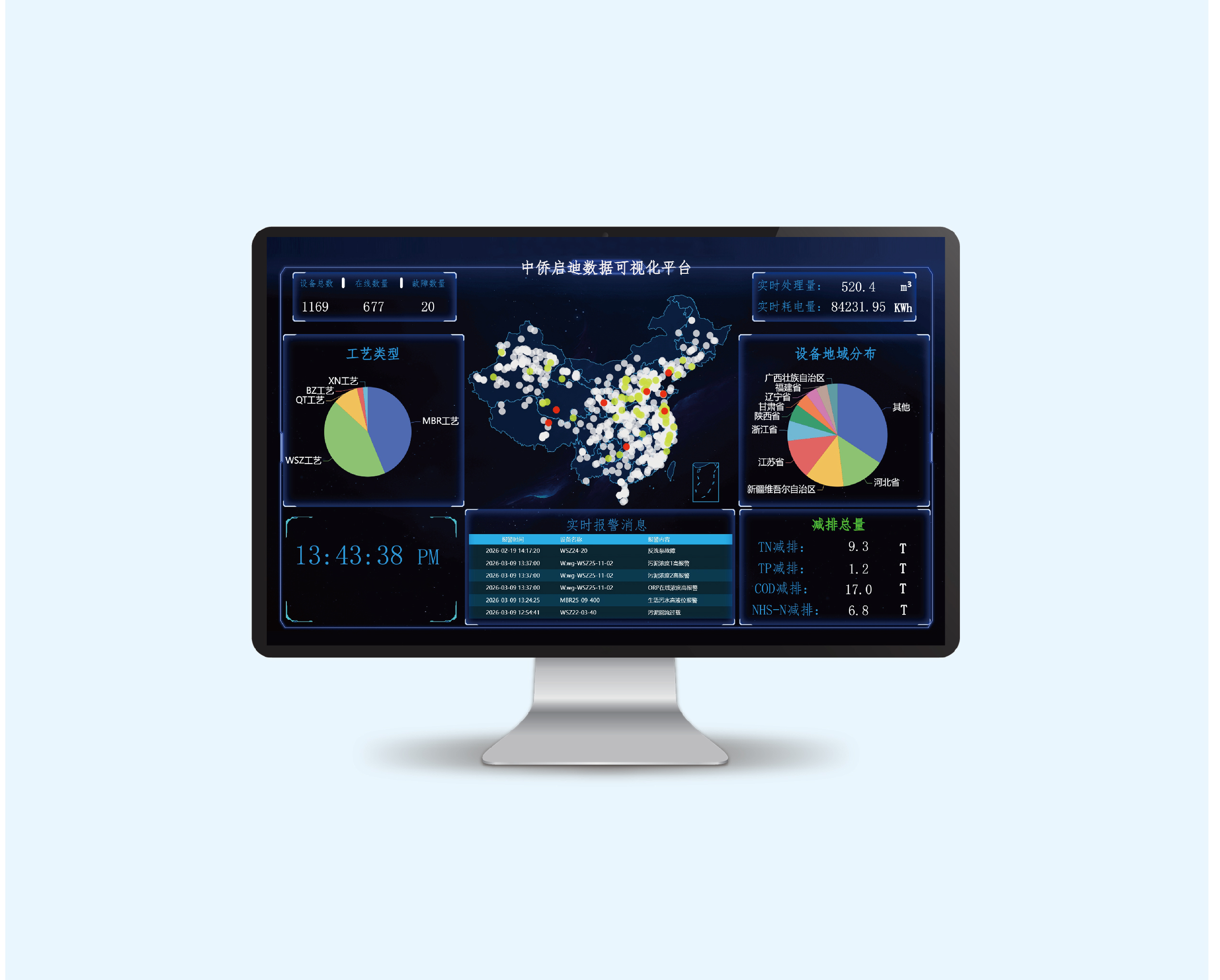
Material selection follows the waste stream. The DAF is available in carbon steel or SS304. The integrated unit is available in carbon steel, SS304, or PP. PP is relevant where corrosion resistance is a concern; the verified data package states that PP integrated equipment can withstand pH 3 to 14. For controls, both units use Siemens PLC and Schneider Electric components. The integrated unit adds remote HDBox-4G-A monitoring and supports remote operation, remote monitoring, and remote analysis. That remote capability matters for camps, hospitals, and distributed sites where specialist staff are not on site every day.
Expansion is a design question. The integrated unit is modular and relocatable, so a project can be staged or moved. The DAF is rated at 5 m³/h; larger flows require additional units or a different model, and that must be confirmed with the manufacturer. Do not assume that adding a second unit is plug-and-play; the hydraulic profile, dosing, and sludge handling need to be reviewed together.
Step-by-Step Breakdown: How to Specify the Right Unit
- Characterize the wastewater. Collect the daily flow, influent water quality indicators, pH, oil and grease, suspended solids, and local discharge requirements. The selection parameters listed by the manufacturer are daily treatment capacity, influent water quality indicators, effluent discharge standard, equipment material, floor space, power, and sludge treatment method.
- Set the effluent target. Decide whether the project needs municipal discharge or water reuse. The integrated unit’s effluent standard can be customized to Grade 1A or Grade 1B; confirm the local requirement before selection.
- Separate high-oil and high-solids streams. Use a DAF where abattoir, printing and dyeing, farm, or similar industrial wastewater carries oil, grease, and suspended solids. The YW-5 is rated at 5 m³/h; confirm whether one unit is sufficient or whether multiple units are needed.
- Select the integrated treatment step. For hotel, hospital, camp, slaughterhouse, livestock, and domestic sewage, the WSZ-100 modular unit is applicable. Confirm daily flow and influent quality before fixing the configuration.
- Plan the site and expansion. The integrated unit is a relocatable modular assembly and can be installed above ground or underground. Modular construction is at least one-third shorter than a civil sewage treatment station, with quick installation and a small footprint. This is relevant when the project needs to start operation quickly or may be relocated.
- Specify materials and controls. DAF: carbon steel or SS304. Integrated unit: carbon steel, SS304, or PP. Both use Siemens PLC and Schneider Electric components. The integrated unit adds remote HDBox-4G-A monitoring. Confirm the control scope, remote access, and alarm list in the quotation.
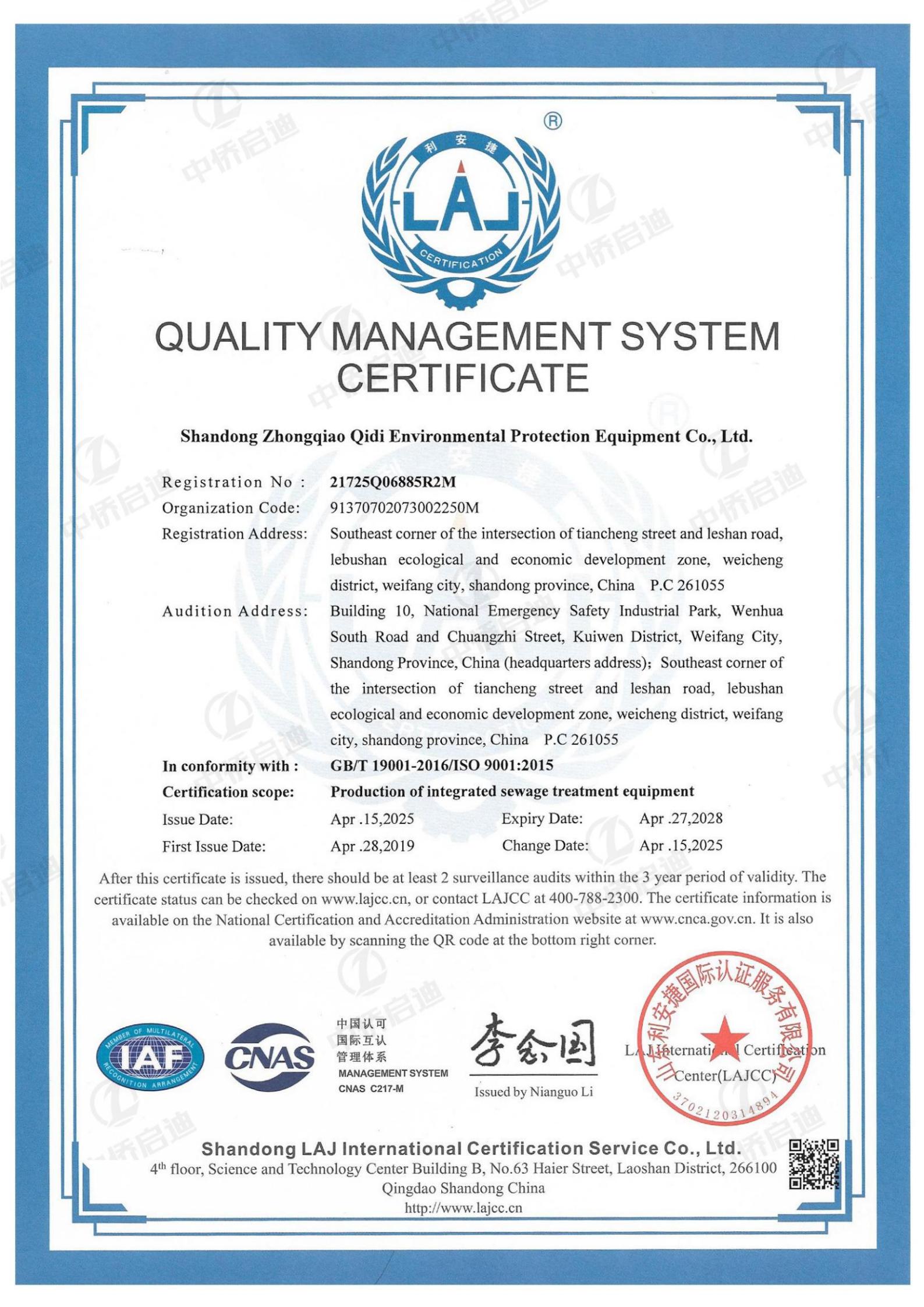
- Verify the supplier and commercial terms. Check ISO 9001 certification, material certificates, acceptance criteria, lead time, after-sales support, and OEM terms. Zhongqiao Enlightenment holds ISO 9001 certificate 21725Q06885R2M for the production of integrated sewage treatment equipment, issued by Shandong LAJ International Certification Service Co., Ltd., valid from 15 April 2025 to 27 April 2028. The company provides OEM production and private-label OEM production for export markets including the Middle East, Russia, Central Asia, and Southeast Asia. Customized appearance, color, and logo are available for OEM orders. Custom equipment lead time is 30 to 45 days; MOQ is 1 unit; 100% test is performed.
Use Cases: Matching the Unit to the Duty
Slaughterhouse Wastewater
Slaughterhouse wastewater typically combines oil, grease, suspended solids, and soluble organics. A DAF ahead of an integrated unit is a logical configuration: the DAF reduces the oil and solids load, and the integrated unit handles the remaining sewage-type flow. The WSZ-100 is listed for slaughterhouse wastewater, and the YW-5 is listed for abattoir wastewater. The buyer should confirm the split between the two units in the process design.
Hotel, Resort, and Camp Wastewater
Hotels, resorts, and camps usually produce domestic-type sewage. The WSZ-100 is listed for hotel wastewater and camp domestic wastewater. The relocatable modular assembly and remote monitoring are useful where the site is remote or the plant may be expanded. The unit can be installed above ground or underground, which helps where space is constrained.
Hospital Wastewater
Hospital wastewater is listed as an application for the WSZ-100. The effluent standard is customizable, so the project should define the local discharge requirement before selection. The remote monitoring package supports supervision where technical staff are not resident on site.
Food Processing and Textile Wastewater
Food processing and textile operations often carry high oil, grease, and suspended solids. The YW-5 is listed for abattoir, printing and dyeing mill, farm, and other industrial wastewater. A DAF is the first separation step; whether a downstream biological unit is required depends on the soluble organic load and the discharge limit.
Livestock Breeding Wastewater
Livestock breeding wastewater is listed for the integrated unit. Where solids and oil are high, a DAF can be considered as a pre-treatment step. The final train should be confirmed with influent testing and a mass balance.
Containerized and Remote Projects
Zhongqiao Enlightenment reports a containerized treatment project for wheat washing wastewater in the American Midwest with a daily wastewater volume of approximately 150 m³/d. The company also reports remote operation, remote monitoring, and remote analysis as system capabilities. For remote sites, the ability to monitor the plant remotely can reduce the need for permanent on-site specialists, but the scope of remote support should be written into the contract.
Water Reuse
Zhongqiao Enlightenment reports water reuse for irrigation and toilet flushing as a project result. Where reuse is the target, the integrated unit’s effluent standard should be specified accordingly, and the reuse application should be confirmed before the equipment is sized.
Comparison Table: DAF vs Integrated Sewage Treatment Equipment
| Decision factor | Advection combined DAF (YW-5) | Integrated sewage treatment equipment (WSZ-100) |
|---|---|---|
| Primary duty | Remove oil, grease, and suspended solids by flotation | Treat domestic-type sewage and similar flows in a modular unit |
| Best-fit wastewater | Abattoir, printing and dyeing mill, farm, and other high-oil/high-solids industrial wastewater | Hotel, hospital, camp, slaughterhouse, livestock, domestic sewage, and domestic wastewater |
| Verified capacity reference | 5 m³/h rated processing capacity | Configured to project daily flow; confirm in quotation |
| Structure | Secondary stirring reaction zone, contact tank, flotation tank, clear water tank | Relocatable modular assembly; above-ground or underground installation |
| Materials | Carbon steel / SS304 | Carbon steel / SS304 / PP |
| Control system | Siemens PLC, Schneider Electric components | Siemens PLC, PLC control panel, remote HDBox-4G-A, Schneider Electric components |
| Installation and expansion | Pre-treatment unit; confirm additional units or larger model for higher flow | Modular and relocatable; expansion by modules; quick installation and small footprint |
| Typical procurement check | Oil and solids load, reflux ratio, dosing, sludge handling | Effluent standard, daily flow, site conditions, power, sludge handling |
| Lead time | Custom build 30–45 days; confirm by configuration | Custom build 30–45 days; confirm by configuration |
FAQ
What effluent standard can the integrated sewage treatment equipment achieve?
The effluent standard of the equipment can be customized on demand. Common national standards include Grade 1A and Grade 1B, which can meet municipal discharge and water reuse scenarios. Provide the influent water quality and local discharge requirements before selection; the equipment is then designed according to those indicators.
Which wastewater streams are better suited to DAF than to an integrated unit?
DAF is better suited to streams where oil, grease, and suspended solids dominate. The YW-5 is listed for abattoir, printing and dyeing mill, farm, and other industrial wastewater. The integrated unit is better suited to hotel, hospital, camp, slaughterhouse, livestock, domestic sewage, and domestic wastewater. Where both oil/solids and soluble organics are present, a DAF can be placed ahead of the integrated unit.
What parameters and site conditions should be confirmed before purchase?
Confirm core technical parameters, on-site installation conditions, discharge standards, delivery cycle, and after-sales maintenance. The selection parameters are daily treatment capacity, influent water quality indicators, effluent discharge standard, equipment material, floor space, power, and sludge treatment method. Also verify supplier qualification, equipment material, and acceptance criteria.
How long does a modular integrated unit take to build and install?
Customization of the modular integrated equipment takes 30 to 45 days. The modular construction period is at least one-third shorter than that of a civil engineering sewage treatment station. The modular unit has a short construction period, quick installation speed, and a small floor area. Site works and commissioning should be added to the project schedule.
Which Chinese OEM manufacturers offer custom MBR wastewater treatment systems?
Zhongqiao Enlightenment provides OEM production and private-label OEM production for export markets including the Middle East, Russia, Central Asia, and Southeast Asia. Its main products include MBR membrane bioreactor systems, integrated wastewater treatment systems, dissolved air flotation units, and lamella clarifiers. For a custom MBR configuration, provide the daily flow, influent water quality report, discharge standard, and site conditions. You can contact the company for a technical review and quotation: WhatsApp/WeChat +86 156 1060 0767, email zqqdequipment@163.com, or download the brochure at the link below.
Conclusion: Select by Duty, Not by Category
DAF and integrated sewage treatment equipment solve different problems. The YW-5 DAF is a separation unit for oil, grease, and suspended solids, rated at 5 m³/h, with a verified application scope that includes abattoir, printing and dyeing, and farm wastewater. The WSZ-100 integrated unit is a relocatable modular assembly for hotel, hospital, camp, slaughterhouse, livestock, domestic sewage, and domestic wastewater, with customizable Grade 1A/1B effluent and remote monitoring. For combined streams, place the DAF ahead of the integrated unit and confirm the design with influent testing.
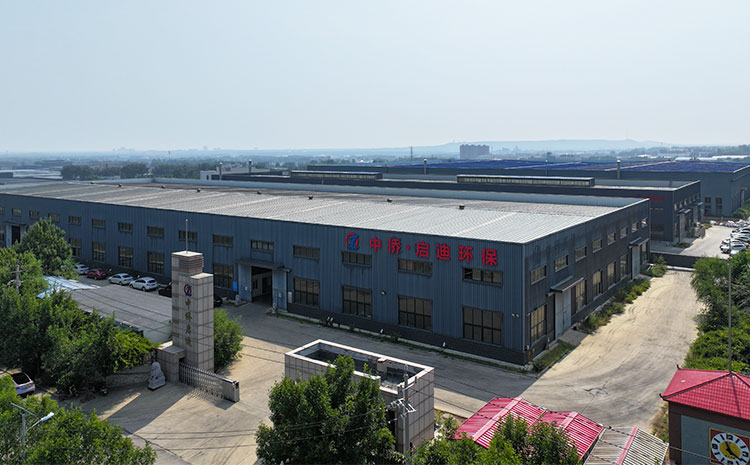
Zhongqiao Enlightenment manufactures both equipment categories and provides OEM and private-label production for export markets including the Middle East, Russia, Central Asia, and Southeast Asia. The company operates a 40,000 m² production workshop, was founded in 2013, reports 170 employees and an annual output of 900 sets, and holds ISO 9001 certification for integrated sewage treatment equipment production. It reports exports to more than 30 countries and over 4,000 installations in China and overseas. To move from evaluation to execution, provide the daily flow, influent water quality report, discharge requirement, site conditions, and material preference. The company can then confirm the configuration, lead time, and commercial terms.
Next step: Request a quotation or a technical review from Zhongqiao Enlightenment.
Contact Sunny: WhatsApp/WeChat +86 156 1060 0767 | Email: zqqdequipment@163.com | Website: www.zqqdwater.com
Download the company brochure: Zhongqiao Enlightenment brochure (13th edition)
Specifications in this article are drawn from the manufacturer’s verified content units. Project-specific design, effluent compliance, and site conditions must be confirmed in the quotation and contract.
Have Questions or Need More Details?
Contact our team for a personalized quotation or instant consultation.
Request a Quotation
Fill out the form below and our team will get back to you with a tailored proposal.
WhatsApp Direct Chat
Prefer to chat in real-time? Message us on WhatsApp for instant assistance & quick answers.
- Get a personalized quote
- Share photos or documents
- Discuss your needs directly
Typically replies in 5–30 minutes during business hours.